How meme coin trading works in 2026 when speed beats conviction
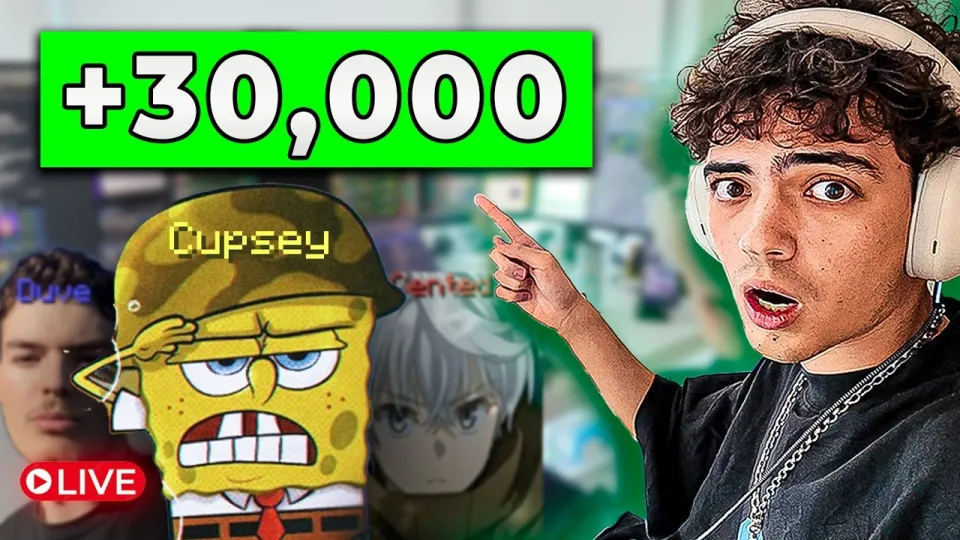
Video: I Traded With The World’s #1 Memecoin Trader
Want articles like this for your own video to promote it on YouTube and Google? Order them through the Telegram bot @sat_sit_bot. It writes articles around your video, embeds the video and publishes them on popular niche websites (no ads). Free trial — 50 articles.
· based on the channel Ethan Prosper
Key takeaways
- In the Ethan Prosper session, the trader Cupsey turns roughly 200 SOL into 350+ SOL across a handful of Solana meme coin trades in a single sitting.
- The format is speed trading: dozens of new pairs a day, entries measured in seconds, and exits that often come before a chart even forms.
- The featured trades include Lobo and a token called 1% (about +200 SOL), Cheese Coin, an Elon/Grok-themed bot coin (+$15K), Magic Internet Money and Mosaic AI (+80 SOL).
- Tools in play are Solana trading terminals and Pump.fun-style launches, plus wallet tracking of the dev behind a coin.
- Most viewers should not copy this style: the video's own commenters note it is a 10+ hour-a-day routine and the hardest way to trade crypto.
Meme coin trading is the practice of buying newly launched, community-driven tokens on chains such as Solana and selling them into short-term momentum, and the fastest version of it is what you see in Ethan Prosper's session with a top-ranked memecoin trader: a handful of Solana launches traded within minutes for a swing from roughly 200 SOL to 350+ SOL. If you want to follow the same route, the terminal used in the video is available through registration on Padre. The takeaway for most readers is not the profit number but the process behind it: wallet tracking, launch screening, fast execution and strict sizing.
What a top meme coin trader actually does in a session
A professional meme coin session is a screening-and-execution loop, not a single big bet. In the Ethan Prosper video the guest, known as Cupsey, moves through several Solana launches in sequence: Lobo and a token called 1% (together around +200 SOL), Cheese Coin, an Elon-and-Grok-themed bot coin that added about $15K, Magic Internet Money, and Mosaic AI (around +80 SOL). The pattern repeats: a new pair appears, the dev wallet and early buyers are checked, a position is taken within seconds, and the exit is decided by order flow rather than by a long thesis.
That is why the style is often called speed trading. Positions are small relative to the bankroll, the number of attempts is high, and the edge comes from being early and disciplined rather than from being right about a project's future. Anyone who treats a single meme coin as an investment is playing a different game from the one shown on screen.
How the trades in the Ethan Prosper session were structured
The structure of the session is a repeatable checklist applied to each new launch. Watching the trades in order gives a practical template:
- Find the pair early. New Solana launches appear constantly on Pump.fun-style venues and are surfaced in trading terminals; the trader's advantage is seeing them before the crowd.
- Read the dev and the wallet map. The video explicitly tracks the wallet behind a coin (the "Magic Internet Money dev" segment), because a dev who has launched and dumped before is a warning, and a dev who holds or buys back is a signal.
- Size for survival. The 200-to-350 SOL swing came from many attempts, not one all-in. Small initial entries let a trader take several shots per hour.
- Exit into strength. Profits are taken when buyers arrive, not when a target is hit; meme coin liquidity disappears faster than any chart pattern forms.
- Log the result and move on. Each trade in the session is closed and reviewed before the next launch is opened.
Why wallet tracking matters more than charts on new pairs
Wallet tracking is the core skill in early meme coin trading because there is no chart history to analyse on a token that launched minutes ago. Instead, traders read on-chain behaviour: which wallets bought first, whether the dev's wallet is selling into the pump, whether the same cluster of addresses appears on every launch. The video's segment on a dev behind Magic Internet Money is exactly this kind of due diligence, and the guest's own wallet is public, which lets viewers study his entries after the fact.
For a beginner, the practical version is simple: before buying any new pair, open the holder list, check the top wallets, and look at what the creator's address has done on previous launches. If the top holder is a wallet that has dumped every prior coin, the trade is a coin flip against a better-informed counterparty.
The risks nobody clips for the highlight reel
The main risk in meme coin trading is that the visible wins hide a large number of small losses and outright rugs. A token can lose most of its liquidity in seconds when the dev or an early cluster sells, and there is no exchange support line to call. Slippage on thin pools can turn a planned 20% gain into a loss on the way out, and network fees plus priority fees on Solana add up across hundreds of attempts.
The audience reaction to the video captures the tension well. Some viewers celebrate the result, others point out that this is a full-time, ten-hour-a-day routine and the most difficult style of trading available, and one of the most-liked comments warns that the same fast wallets are often the ones taking liquidity from slower buyers. Both things are true at once: the skill is real, and the game is adversarial.
Common viewer questions about getting started with meme coins
Viewers of the session repeatedly ask the same practical questions, and they deserve direct answers rather than hype. The most common is how much capital is needed: the traders in the video work with hundreds of SOL, but the mechanics are identical with a fraction of that, and the position sizing rule matters more than the balance. The second is what "faucets" means in this context, a term used for sources of small amounts of capital or tokens that traders use to keep testing strategies. The third is how to pick which coins to buy, which comes down to the screening checklist above rather than to any single indicator. The fourth is whether copy trading works, and the honest answer is that copying entries without copying exits usually transfers the risk and not the edge.
A useful middle path for most people is to trade larger, more liquid coins with the same discipline, and to treat new-pair sniping as a specialist activity rather than a starting point.
Useful links from the video
- Trade on Padre terminal — the terminal used for execution in the session
- https://ethanprosper.com — all of the creator's links in one place
- https://x.com/cupseyy — the guest trader's public profile
- https://discord.gg/solmafia — free Discord community
- https://www.joinpastel.com/r/ref=ETHAN — paid research community
Final thoughts on meme coin trading
The Ethan Prosper session is a useful window into how professional meme coin traders actually operate: many small attempts, constant wallet checks, exits into demand and a tolerance for being wrong often. It is not a template for passive investing, and the comment section is right that the style demands full-time attention and carries the highest risk in crypto. Treat the numbers as a demonstration of process rather than a promise, start with position sizes you can lose entirely, and study the wallet data before you copy any entry. If you want to see the execution environment for yourself, start with Padre registration and paper-trade the checklist before risking real capital.
Questions & answers
How much money do you need to start trading meme coins?
You can start with a small balance, because the mechanics of buying a new Solana pair are the same at any size. What changes is position sizing: professionals in the video work with hundreds of SOL but risk only a fraction per attempt. A reasonable rule is to risk no more than a few percent of your bankroll on any single launch, since a large share of new pairs go to zero.
Are meme coins a good investment in 2026?
Most meme coins are short-term trading instruments rather than investments, since they have no cash flow and liquidity can vanish quickly. A small allocation to highly liquid, established meme tokens is a different proposition from sniping brand-new launches. Treat any purchase as money you can afford to lose entirely.
What tools do professional meme coin traders use?
They use Solana trading terminals for fast execution, wallet trackers to see what the dev and early buyers are doing, and launchpads such as Pump.fun to find new pairs. The Ethan Prosper session shows this stack in action, with the Padre terminal handling order execution. The tools are widely available; the edge comes from the checklist applied to them.
Is copy trading meme coins a safe strategy?
Copy trading transfers entries but rarely transfers the exit discipline that produces the result, so followers often hold positions the original trader has already sold. It can work as a learning tool if you study the wallet's history and understand why each trade was taken. Without that, it mostly adds risk.
Source: I Traded With The World’s #1 Memecoin Trader · Markdown version